A translated interface is not always a designed interface. Arabic changes more than the alignment of text. It changes where scanning begins, how navigation is understood, which direction feels natural and how mixed content behaves.
Designed from the Right started with that premise. The goal was not to flip an existing travel interface. The goal was to rebuild familiar patterns from an Arabic-first reading model.


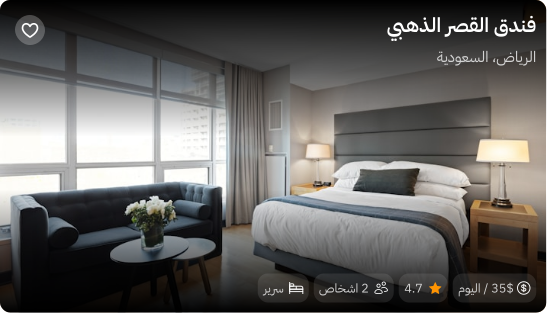
Direction is part of hierarchy
In RTL interfaces, the right side often carries the beginning of meaning. Back actions, menu placement, bottom navigation order, form flow and metadata all need to respect that rhythm.
When those details are inconsistent, the interface may still be readable, but it feels borrowed. Native-feeling design comes from the accumulation of these decisions.
Design before localization
The strongest RTL work happens before translation. It happens when direction, hierarchy and interaction are treated as product logic from the beginning.